Championship playing surface
Even texture and consistent pace across the whole court, tuned fast, medium or slow to suit your players.
Bring a tired, faded or cracked court back to championship condition — without the cost of a full rebuild.
If the base is sound, resurfacing restores grip, colour and true bounce for a fraction of the cost of rebuilding — and it is the single best-value decision most court owners ever make.
We start by establishing whether the existing base is structurally sound. If it is, the court is high-pressure cleaned, cracks are routed and filled, low spots are patched and levelled, and the whole surface is prepared for the new acrylic system.
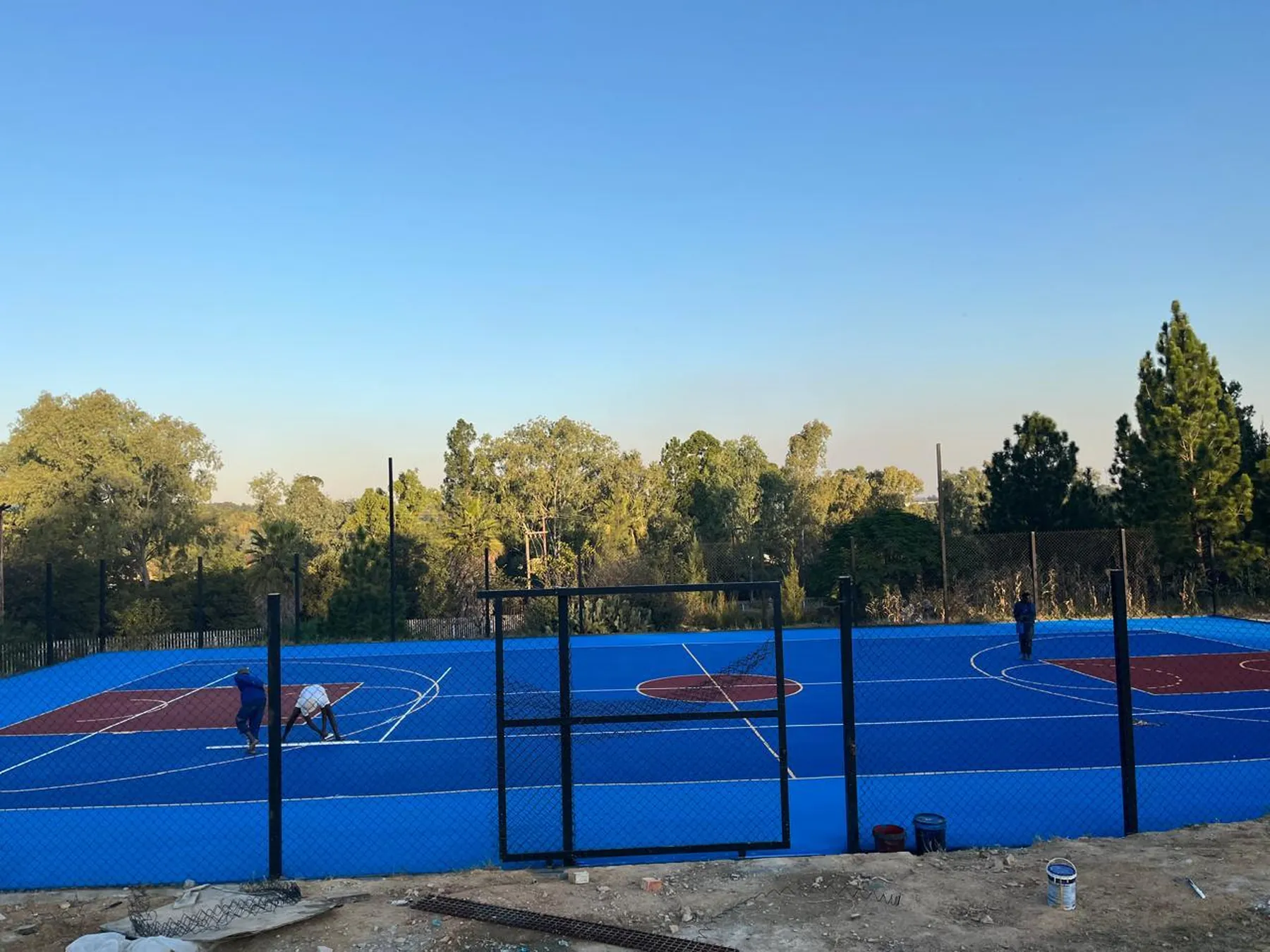
Resurfacing then goes on in layers: a resurfacer or levelling coat to correct texture, two or more acrylic colour coats with graded silica for the playing speed you want, and finally fresh championship line marking in crisp, straight white.
The court comes back looking new — deep, even colour, consistent pace, no slick patches — and the whole process is typically finished inside a week of good weather.
The specific advantages this service delivers — and what they mean for the life of your court.
Even texture and consistent pace across the whole court, tuned fast, medium or slow to suit your players.
Colour coats that hold their tone through South African summers instead of chalking out.
Cracks routed, cleaned and sealed before coating, so they do not telegraph straight back through the new surface.
Crisp, straight, correctly-dimensioned lines in hard-wearing line paint.
Most single courts are back in play within a week, weather permitting.
Where the base is sound, resurfacing delivers a new playing surface at a small percentage of new-build cost.
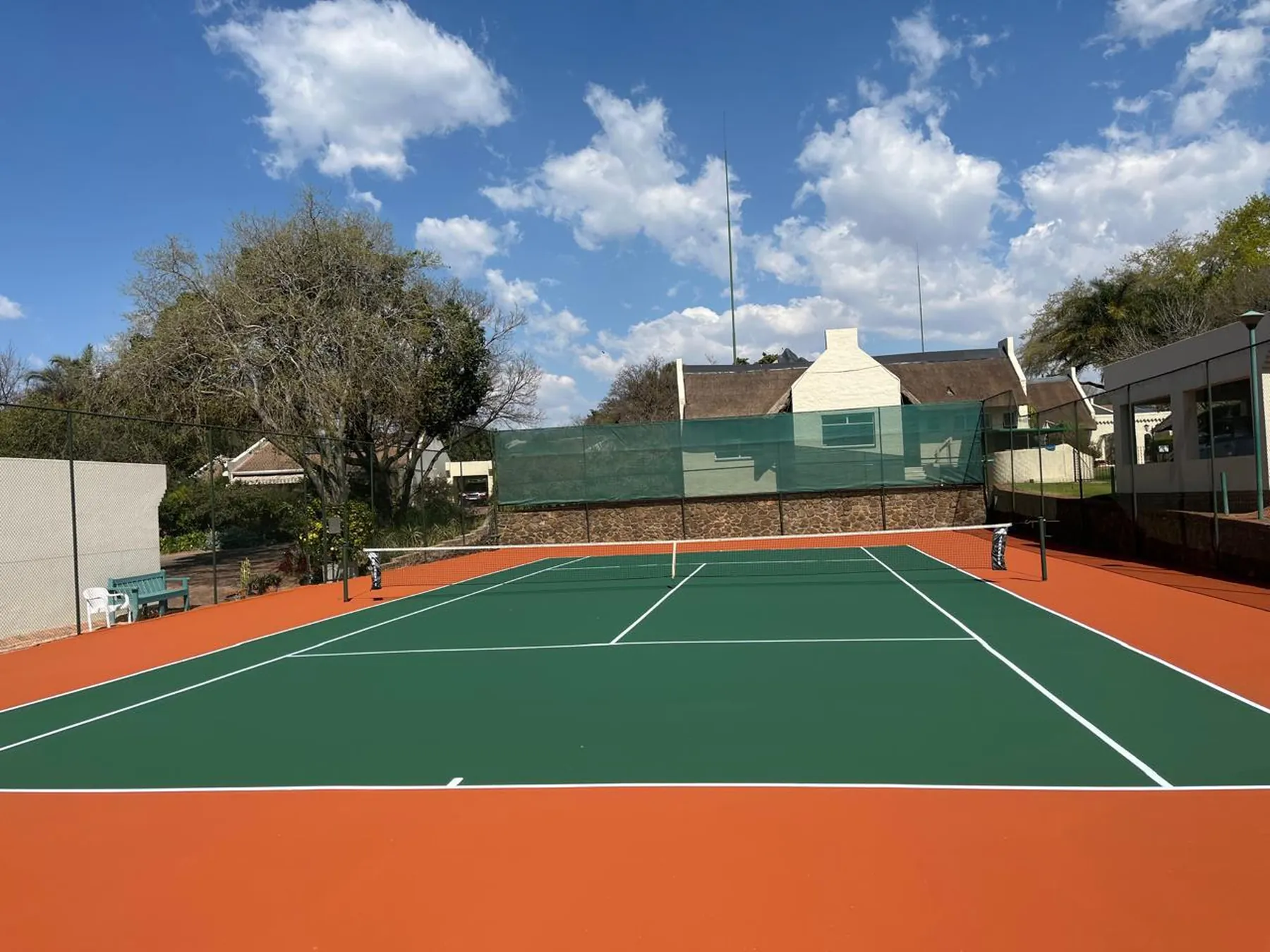
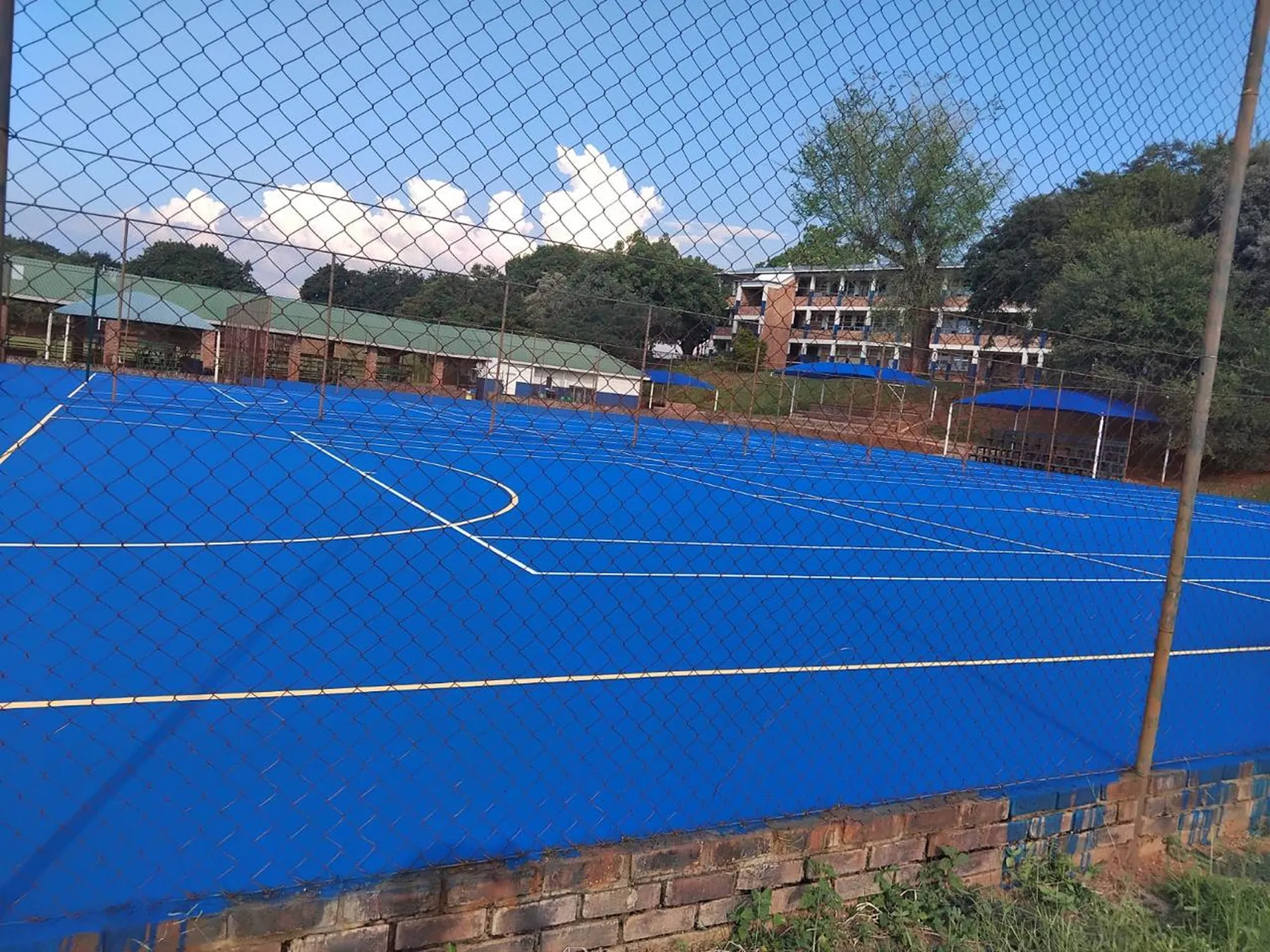
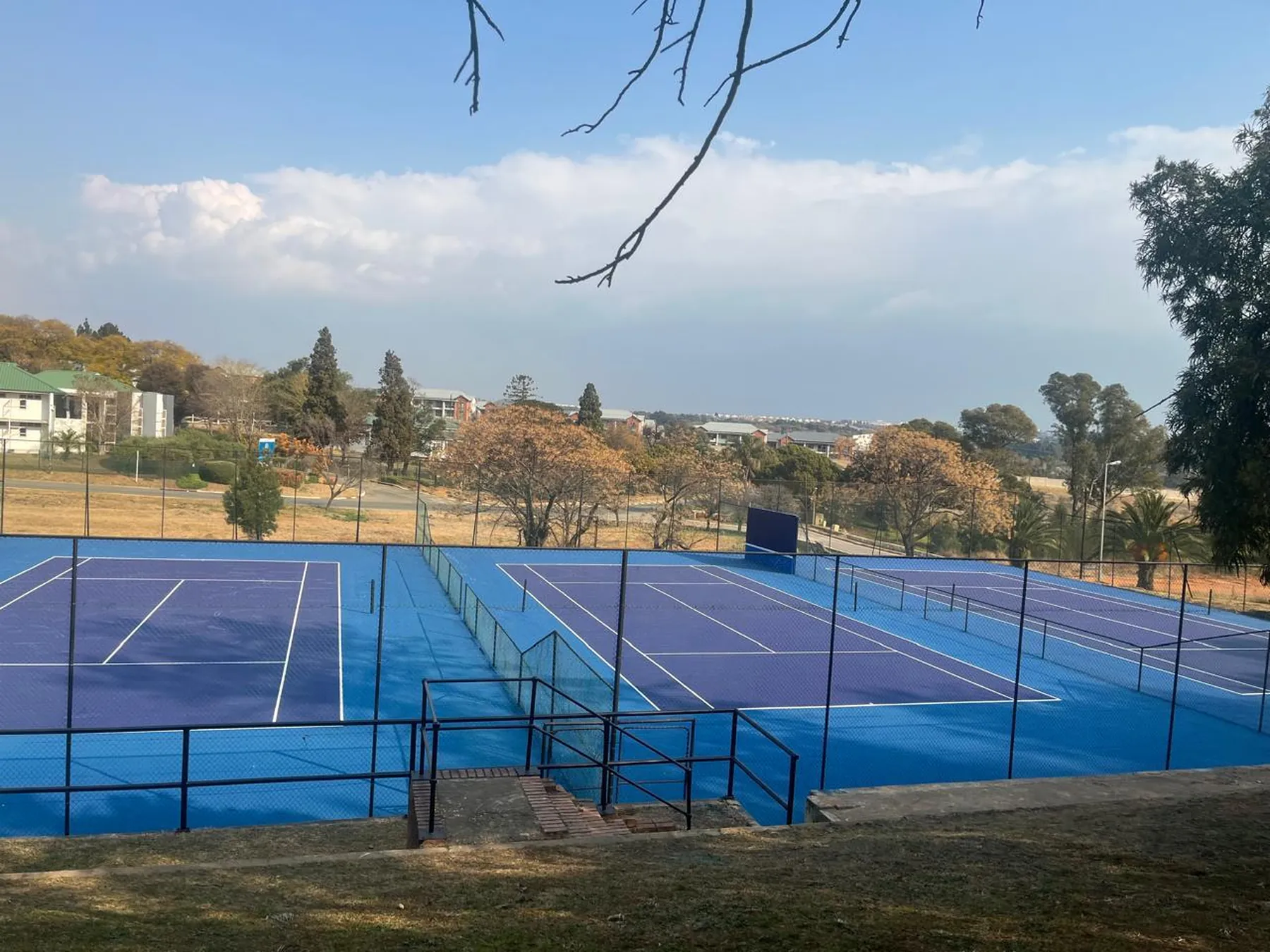
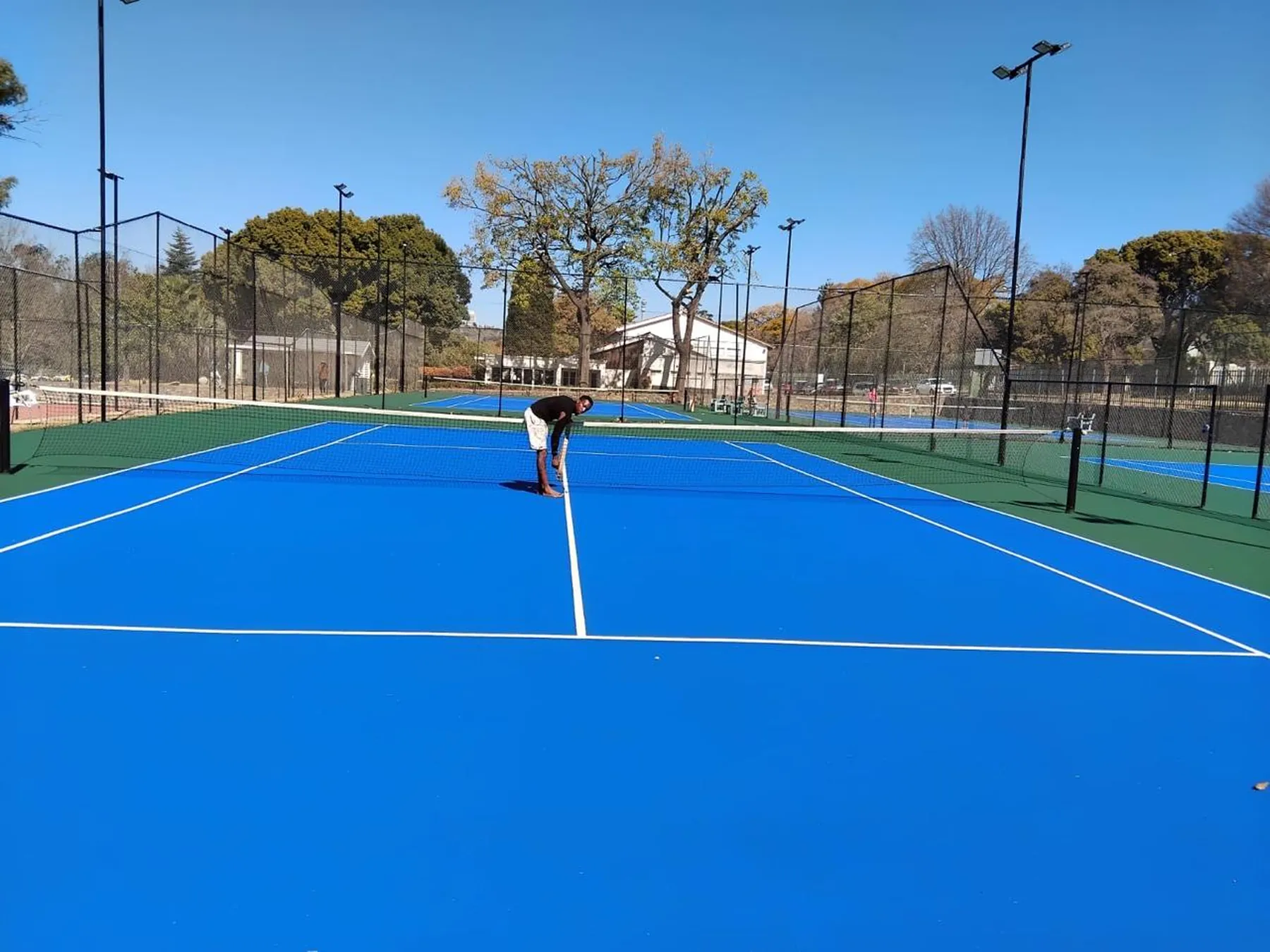
Photographs from recent projects. Click any image to view it full size.
Full Gallery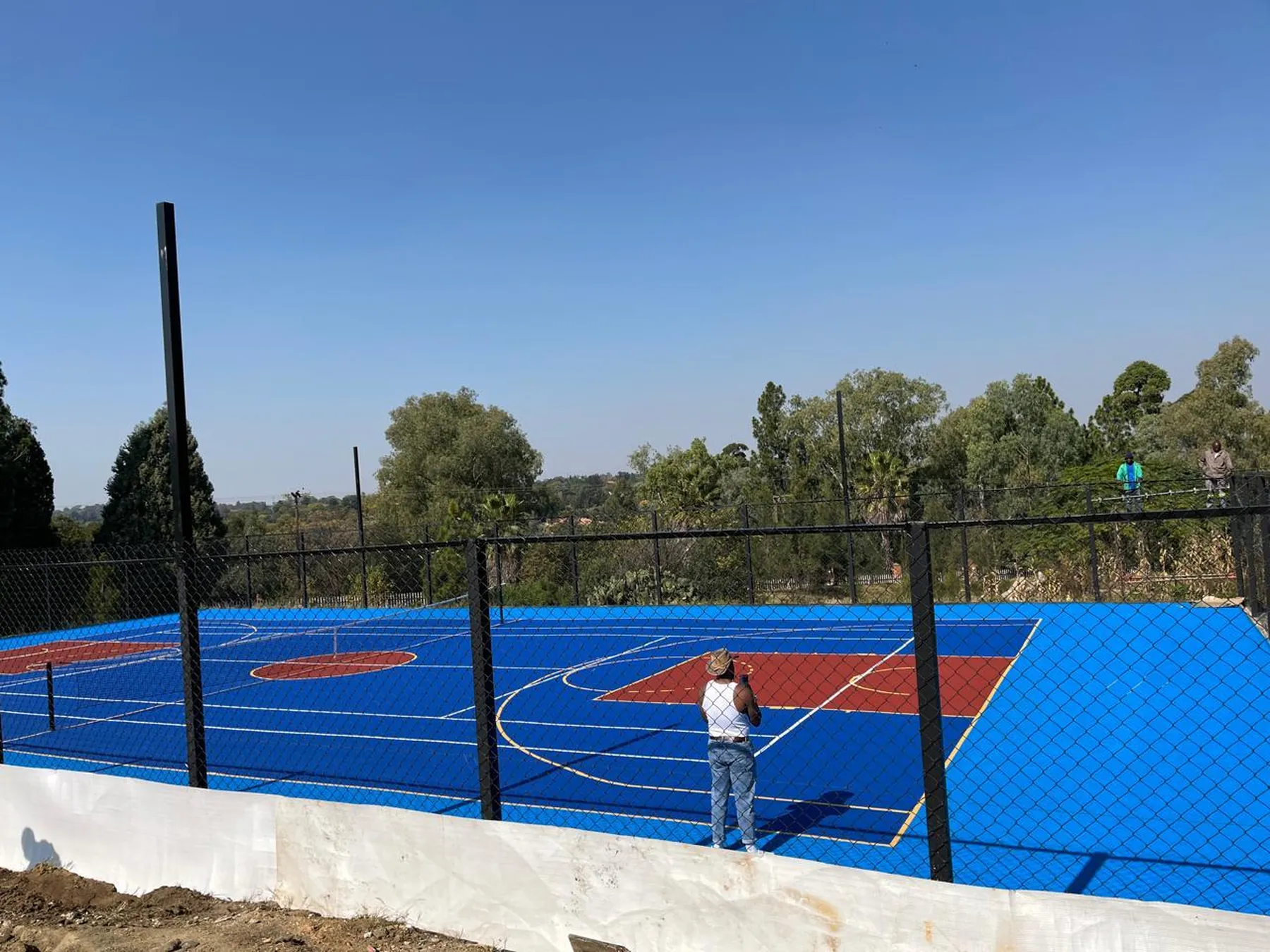
Feedback from clients whose courts we have worked on.
The questions we are asked most often about this service.
Speak to someone who actually builds courts.
Acrylic hard courts are typically resurfaced every five to eight years, depending on usage, sun exposure and how well the court has been maintained. Club and school courts at the busier end of that range; lightly used private courts at the longer end.
Fading, loss of grip, hairline cracking and worn line marking usually mean resurfacing. Structural failure — deep cracks that move, sinking sections, standing water that never drains — points to base problems that resurfacing alone will not fix. Our free inspection tells you honestly which one you are dealing with.
Usually four to seven working days for a single court, including cleaning, repairs, coating and line marking. Each coat needs to cure, so rain extends the programme.
Yes. Resurfacing is the ideal time to change colours — classic green and terracotta, the modern blue-and-green tournament look, or colours matched to your club, school or estate branding.
Cracks are routed out, cleaned and filled with a flexible crack-repair system before coating, which dramatically reduces recurrence. Where cracks are caused by movement in the base, we will tell you up front rather than coat over a problem.
Send us the details and we will arrange a free site inspection. You will receive a written, itemised quotation with no obligation.
New tennis courts engineered from the sub-base up — correct falls, proper drainage and a surface built to last decades.
Learn moreScheduled cleaning, treatment and care that protects your surface investment and keeps courts playable all year.
Learn moreCrack sealing, patching, drainage correction and net repairs that stop small problems becoming expensive ones.
Learn moreTell us about your site and we will arrange a free, no-obligation inspection and a written, itemised quotation. Most inspections in our service area are booked within a few working days.
